
To listen to today’s reflection as a podcast, click here
No one can see the future.
For that matter, no one can see the present, either.
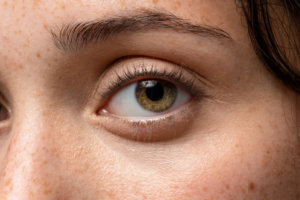
Every second that your eyes are open, they receive and send approximately 100 billion signals down your optic nerve to your cerebral cortex.
Your brain processes those signals and prepares appropriate responses.
Unfortunately, there’s some lag time in this remarkable drama. It takes something like a fifth of a second for a particular visual input to be received and processed. That means there’s a gap between what is happening right now and your awareness of it.
A fifth of a second may not seem very long. But what if you need to dodge a falling object, avoid that squirrel that just darted in front of your car, or extend your arms at just the right moment to catch the winning pass in this weekend’s flag football game? Even the smallest slice of time would count.
Human beings have a unique means of resolving this dilemma. It involves the most splendid organ in your body, and what cosmologists agree is the most complex configuration yet encountered anywhere in the universe.
We’re talking about your brain.
During the time it takes you to read or listen to this reflection, that three-pound gray, spongy mass inside your cranium will have processed more information than the Hubble Space Telescope has processed since it went into orbit in 1990.
According to Dr. Magnus Bordewich of Durham University, your brain holds an estimated 200 exabytes of information, roughly equal to “the entire digital content of today’s world.” When this stunning fact became known, a number of scientists began to rethink the proposition that human neurology is nothing but the sum total of billions of fortuitous genetic accidents.
You have one impressive brain, especially considering the fact that 80% of it is just plain old water.
So, how does your brain deal with the time lag between “actual reality” and what you see?
It makes stuff up.
Specifically, your brain fills the gap by generating a likely forecast of the future. That’s the picture that is presented to your eyes. At any given moment you’re seeing what your brain thinks the world will look like a fifth of a second from now.
Strangely enough, that means we never see the world as it really is. As cultural historian Bill Bryson puts it, “We spend our whole lives…living in a world that doesn’t quite exist yet.”
Of course, there are other ways of seeing the future.
We’re not talking about foreign policy experts who feel certain they know when the Strait of Hormuz will reopen; professional gamblers who will bet big bucks on this evening’s opening game of the World Series; and political pundits who are confident they know precisely what will happen in the upcoming midterm elections.
God declares the future as if it’s happening right now – for the simple reason that God, in a way we cannot fully comprehend, exists at the same time in the past, present, and future.
According to the Bible’s most celebrated forward-looking verse, “‘For I know the plans I have for you,’ declares the Lord, ‘plans to prosper you and not to harm you, plans to give you hope and a future” (Jeremiah 29:11).
This is not a divine “maybe.” God’s plans for the future are a certainty – an assurance that cannot be overturned, a promise which cannot be taken back.
In the midst of whatever uncertainties happen to be clouding your life right now – unpaid bills, aging parents, your social calendar, that phone call you’re dreading from the doctor – you can read the shape of the future by fixing your gaze on God, the One who knows the plans he has for you.
That future doesn’t exist quite yet. But one day it will.
Which means that today our call is to take one step at a time by means of the 20/20 vision of faith.