
To listen to today’s reflection as a podcast, click here
Each day this month of August we’ll be looking at one of the extraordinary metaphors that the Bible uses to illustrate the nature of our relationship with God.
“I am the vine; you are the branches. If you remain in me and I in you, you will bear much fruit; apart from me you can do nothing” (John 15:5).
There are no starfish in the Bible.
That’s really not a surprise, since the Hebrews were not a seafaring people and tended to keep a respectable distance from surf and sand.
But there’s something interesting about these creatures – which aren’t “fish” at all, and which marine biologists prefer to call sea stars – which can inform our understanding of a certain botanical metaphor championed by Jesus.
There are more than 2,000 species of sea stars worldwide, all of which thrive in saltwater. They display a remarkable range of sizes and colors. Even though we’re used to thinking of a starfish as having five arms (like SpongeBob’s undersea buddy Patrick Star), some have more than a dozen. One species boasts 40.
Most interesting of all, certain species of starfish have a superpower that’s a bit hard to comprehend: They can regenerate body parts.
Some starfish, in order to flee from predators, can shed one or more of their arms. It might take a few months or even a few years, but missing arms can grow back. Creepiest of all, a severed arm can sometimes grow back an entirely new starfish. This is all accomplished without a neurological managing director, since these multi-limbed creatures do not have brains.
In general, sea stars are brilliant at replacing significant losses.
Human beings are not.
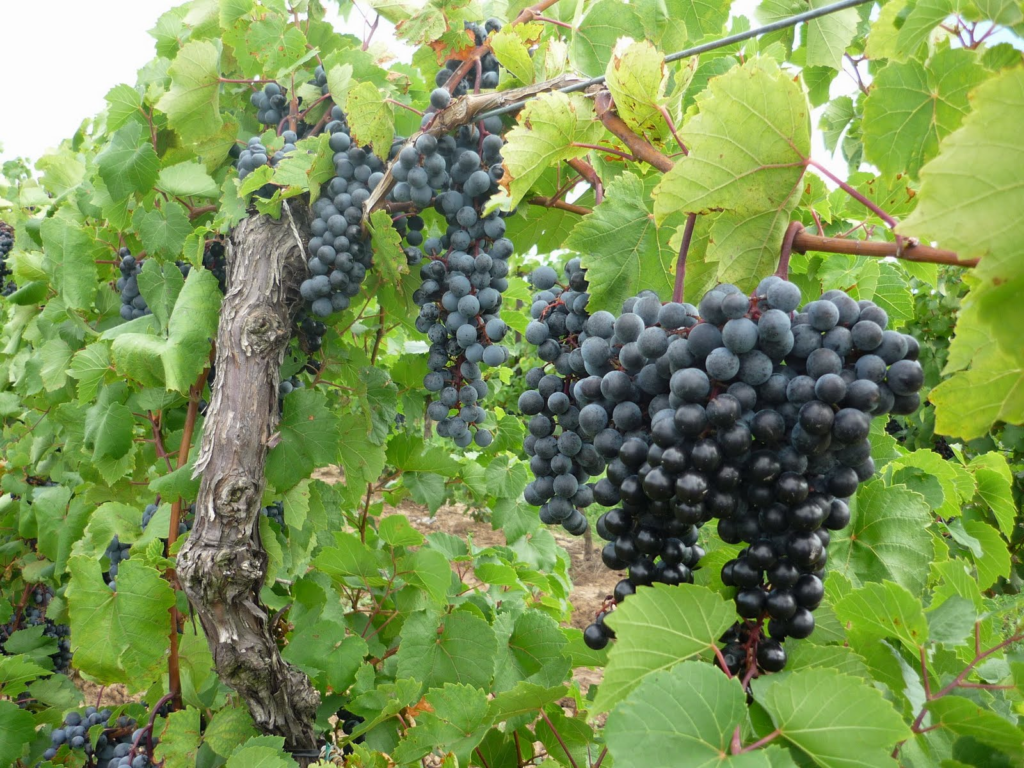
And that brings us to Jesus’ words in the fifteenth chapter of the Gospel of John, where he likens himself to a grapevine and his followers to fruit-bearing branches.
This metaphor is loaded with significance. In the Old Testament, Israel is frequently identified as a choice vine planted by God. Jesus, without so much as a by-your-leave, announces, “I am that vine – everything Israel was always supposed to be.”
He goes on to make it clear that he is the one and only source of spiritual vitality for his followers. He alone can provide the fruit of the Holy Spirit, such as love, joy, peace, and all the other evidences of godly character. “If you stay locked into me and I am locked into you, you will bear much fruit. Otherwise, you will bear no fruit at all.”
What does it mean to “remain in” or be “locked into” Jesus?
Theologians suggest this means cultivating an ongoing, intimate relationship with Jesus – seeking his presence, counting on his love, studying and applying his words.
That’s a beautiful and compelling picture. But it’s not all that Jesus has to say.
“I am the true vine, and my Father is the gardener. He cuts off every branch in me that bears no fruit, while every branch that does bear fruit he prunes so that it will be even more fruitful” (John 15:1-2).
Anyone who has ever had the responsibility of tending vines knows the truth of that statement. If a branch bears no fruit, it’s cut off. If a branch bears much fruit, it’s cut back. Either way, if you’re a branch, you’re going to get cut.
This comes as something of a shock to many Christians. Why in the world would a gracious God descend upon the people he loves with hedge clippers?
Jesus provides the answer: So we will be even more fruitful.
Years ago, during a season of church leadership in which it seemed as if everything in my world was coming apart, a wise woman in my congregation gently said to me, “Ah, the Lord is pruning you so you can serve him even better.”
I did not want to be pruned. I thought I had been serving the Lord just fine, thank you. But she was absolutely right. Today I look back on our brief conversation with profound gratitude, since it sustained my hope when things got even more difficult in the days that followed.
At the time it seemed as if I was surrendering something that could never be replaced – something that felt like losing an arm or a leg. But people are not like starfish. We cannot regenerate our former conditions.
Americans, among all the world’s cultures, struggle to deal with suffering. We do not grieve well. We often rush to fill the holes in our hearts when it would be far wiser to take things slowly.
If we should lose a beloved family pet, for instance, and our children are experiencing the full brunt of the pain, we may feel the need to race to the Humane Society and bring home a new one. We don’t want our little ones to cry.
When friendships and romantic partnerships dissolve, we may try to rebound quickly. We may dread the vast empty spaces on our calendars and feel the need to “get back out there.”
When an irreplaceable person dies, well-meaning friends may suggest ways for us to move on. We should get a new hobby or take a trip or, you know, find something that will take our minds off the loss.
But it’s crucial that we grieve our losses. It’s healthy to feel the weight of sadness – often for a long time – before we think about filling those empty places.
Jesus’ metaphor of the vine and the branches is his reminder that life will always include sudden losses and dramatic interruptions. Even during the “best of all times” or at the height of significant, fruitful ministry, everything can seem to come undone. If God truly loves us, why does he allow such things to happen?
He loves his fruitful branches so much that he prunes them – so they can become more fruitful still.
We may not have super-powers to regenerate lost relationships, lost health, lost jobs, and lost dreams.
But we’re locked into a super-Healer who understands the true significance of all such losses – and the ultimate good they will accomplish.
And that’s better by far.