
To listen to today’s reflection as a podcast, click here
When Paul O’Neill was introduced in 1987 as the new CEO of Alcoa, the world’s largest producer of aluminum, market expectations plummeted.
O’Neill, after all, was a former government bureaucrat, little more than an obscure policy wonk. He knew next to nothing about the aluminum business.
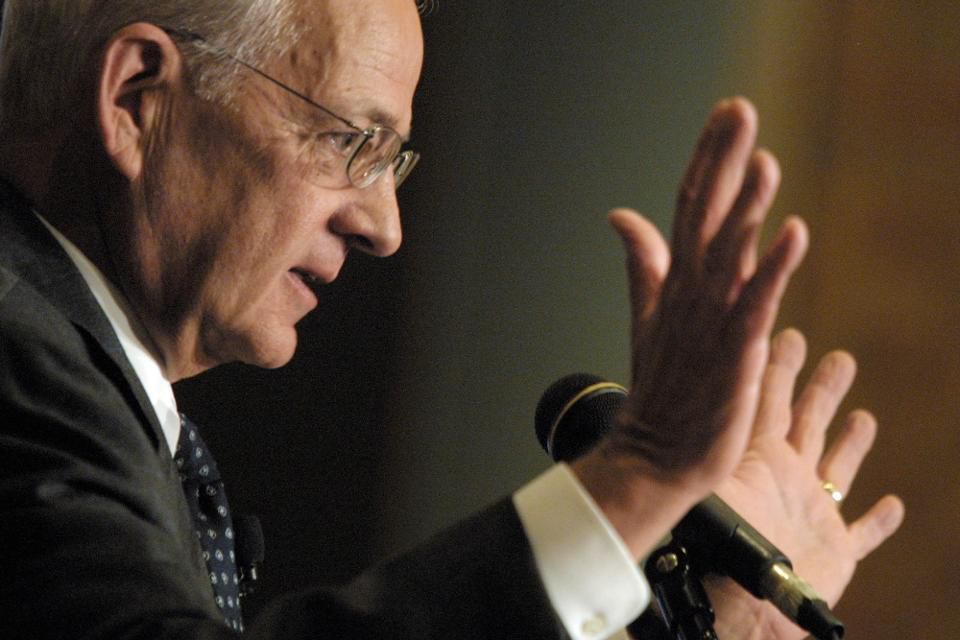
Expectations sank even lower when he took the podium at a special meeting of investors and shareholders in the ballroom of a posh Manhattan hotel that fall.
This was the kind of meeting where a new CEO would typically talk glowingly about strategic direction.
O’Neill shocked everyone with his very first sentence: “I want to talk with you about worker safety.”
What?
“Every year, numerous Alcoa workers are injured so badly that they miss a day of work. Our safety record is better than the general American workforce, especially considering that our employees work with metals that are 1500 degrees and machines that can rip a man’s arm off. But it’s not good enough. I intend to make Alcoa the safest company in America. I intend to go for zero injuries.”
Where were the standard assurances about boosting profits? Where was the long-rang plan to lower costs?
It got worse.
“Now, before I go any further,” O’Neill said, “I want to point out the safety exits in the room. There’s a couple of doors in the back, and in the unlikely event of a fire or other emergency, you should calmly walk out, go down the stairs to the lobby, and leave the building.”
Crickets. The crowd was silent. One of the investors wondered if O’Neill had done a lot of drugs back in the 60’s.
When someone timidly asked about capital ratios, O’Neill made it clear that everything at Alcoa, going forward, would be evaluated by its safety record. “That’s how we should be judged.”
One investor quickly headed for the lobby, where he called his 20 largest clients. “The board put a crazy hippie in charge and he’s going to kill the company.” He ordered them to sell their Alcoa stock immediately.
Later he reflected, “That was literally the worst piece of advice I gave in my entire career.”
That’s because Paul O’Neill’s leadership proved to be brilliant. Within one year, Alcoa’s profits hit a record high. By the time he retired from the company in 2000, stock values had risen 500%.
What was happening here?
Charles Duhigg, in his book The Power of Habit, describes the power of a “keystone habit,” a bedrock practice that brings hope and order to everything else in the life of an organization.
O’Neill changed Alcoa’s culture by forcing the entire corporation to think about just one thing. Alcoa did indeed become the safest company in America. Even though O’Neill never promised that better safety would lead to higher profits, it happened anyway.
That’s because, as Duhigg observes, “Keystone habits start a process that, over time, transforms everything.” Excellence in safety produced a cascade of other successes. Employee confidence rose. Workers began to realize they could accomplish almost anything they set their minds to.
Keystone habits can transform individuals, too.
Studies show, for instance, that your mother was right: You should make your bed every morning. Making one’s bed can become a bedrock practice – a platform which provides a daily dose of confidence and organization that can empower other positive habits.
Over the centuries, followers of Jesus have discovered that faithfulness in a single endeavor – whether beginning each morning by surrendering one’s heart to God, sustaining a regular pattern of reading Scripture, or giving away even a modest portion of one’s income to the poor – can become a stepping stone to a deeper life with God.
Significantly, keystone habits can make all the difference in our relationships.
The apostle Paul proposes just such a practice: “Make the most of every opportunity. Be gracious in your speech. The goal is to bring out the best in others in a conversation, not put them down, not cut them out” (Colossians 4:5,6, “The Message”).
What would happen if you resolved never to make another condescending remark about any human being?
How would your life change, and what would happen to your relationships, if you disciplined yourself to say something positive every time you entered a conversation?
That would be a keystone habit.
It’s the kind of practice that builds trust, changes the way we think, and opens the door to dozens of other grace-based ways of living.
Best of all, it’s unlikely that family members, co-workers, and strangers would ever feel the need to run from the room and sell their stock in you.