
To listen to today’s reflection as a podcast, click here
It’s all about the eyes.
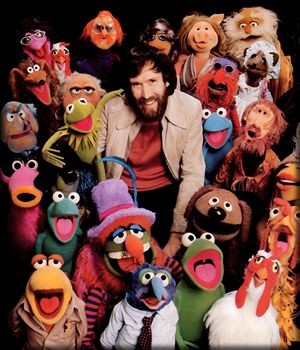
According to their brilliant creator Jim Henson, what always “made” a particular Muppet were the size, shape, and placement of its eyes.
That’s why Henson insisted on personally applying them to every one of his furry puppet creations.
When the eyes were just right, a Muppet’s true personality – whether joyful, thoughtful, or a bit unhinged – faithfully emerged.
Long before Henson’s cast became the stars of Sesame Street, and The Muppet Show reigned as the most-watched television show on the planet, the only way he could pursue his artistic dreams (that is, realistically finance them) was to feature some of his creations in TV commercials.
In the late 1950s, in Washington D.C., he agreed to create a series of promotions for Wilkins Coffee.
No one had ever seen commercials like the ones Jim Henson came up with.
One of his very first Muppets was an odd-looking, coffee-loving creature named Wilkins. His foil was an even odder-looking, coffee-disdaining entity named Wontkins. Wilkins always said yes to a cup of Java. Wontkins? He wasn’t named “won’t” for nothing.
The ads frequently displayed Henson’s signature spirit of playful anarchy.
In one of the earliest spots, Wilkins asks Wontkins if he will try a cup of Wilkins Coffee. When he refuses, Wilkins produces a cannon and blows Wontkins right out of the picture. Then he turns the cannon toward the TV viewers and asks, “So, how about you?”
That’s it. Eight seconds of mayhem.
In fact, all of Henson’s Wilkins ads were just eight seconds long.
It’s worth noting that Henson personally couldn’t stand the taste of Wilkins Coffee. But his commercials – with their edgy unpredictability – became Must See TV for people living in the nation’s capital.
Viewers confessed to sitting all the way through Westerns and game shows just in case a Wilkins ad suddenly appeared. When Wilkins’ coffee sales increased by 25%, Jim Henson and his Muppets were on their way.
Henson made use of whatever materials he had at hand. He took a spring jacket his mother had discarded and with a few snips created Kermit the Frog.
Kermit’s eyes were two halves of a ping pong ball. As always, Henson carefully crafted their appearance, and experimented until he found just the right spots to attach them.
“Outsiders” who got to spend time with the Muppets – from little children to Johnny Carson to guest stars on their show – often found it difficult to believe they weren’t real. It was commonplace to overlook the human operator (who was, of course, right there) and to be drawn in by a particular Muppet’s personality, identity, and character.
Soulful eyes are powerful things.
Jesus made a remarkable comment about human eyes in his Sermon on the Mount:
“Your eyes are windows into your body. If you open your eyes wide in wonder and belief, your body fills up with light. If you live squinty-eyed in greed and distrust, your body is a dank cellar. If you pull the blinds on your windows, what a dark life you will have!” (Matthew 6:22-23, The Message).
Jesus wasn’t speaking on behalf of optometrists.
He was making the point that what we choose to look at, what we yearn to see, and what we give our attention to – in short, how we choose to “see things” – will shape our character and understanding as nothing else.
When it comes to understanding the Old Testament, one interpretive principle trumps all: We must see everything the way Jesus sees it.
Elsewhere in the Sermon on the Mount, he says, “Do not think that I have come to abolish the Law or the Prophets; I have not come to abolish them but to fulfill them” (Matthew 5:17). If Jesus is really God’s Messiah, then everything connected with God’s chosen people must be seen through the lens of his own teaching.
What do we do with the commands in the book of Joshua to wipe out entire communities? Jesus tells us, “Those days are over. My Father commands that we pray for our enemies.” What about the nihilistic statements in Ecclesiastes about life ending in a cemetery? Jesus says, “I am the Resurrection and the Life.”
What about the standing orders in Leviticus to bring never-ending sacrifices to the Lord? Jesus declares, “The Son of Man gives his life as a ransom for many.” What about the centrality of the temple? Jesus is the new temple. Where he is, God is. What about the Promised Land? Jesus’ command to take the good news to every nation means that the whole world is now the Promised Land.
When we see the Old Testament through the eyes of the very Messiah predicted by the Old Testament, rough edges suddenly become smoother and mysteries become less mysterious.
If we get our spiritual eyesight right, in other words, everything else will fall into place.
Which means, in one important regard, we’re all a bit like the Muppets.
The eyes have it.