
To listen to today’s reflection as a podcast, click here
Are you ready for Christmas? During the season of Advent – which annually begins on the fourth Sunday before Christmas and leads up to December 25 – followers of Jesus traditionally look for ways to prepare themselves for the coming of God’s own Son into the world. Throughout December we’ll ponder ways that we can ready ourselves to receive Jesus, once again, into our own hearts.
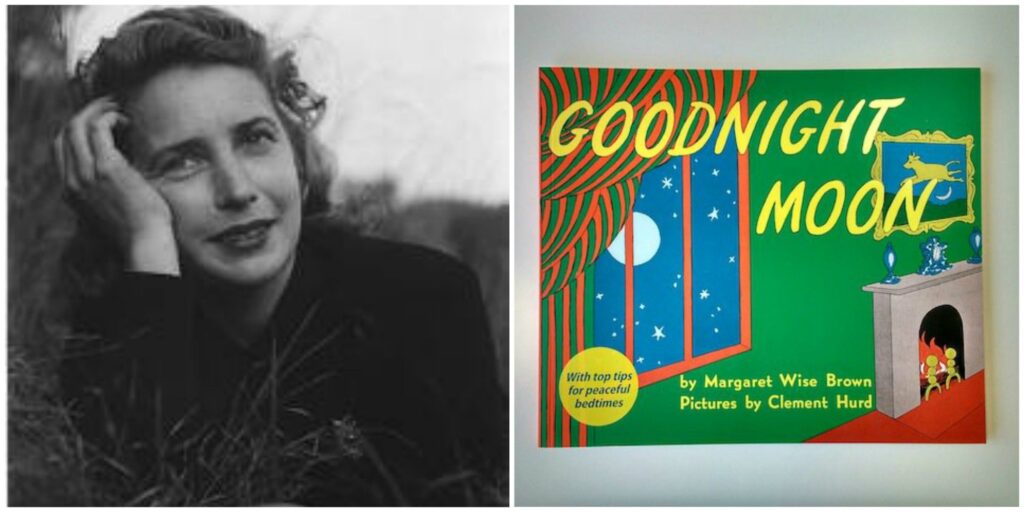
If you were born in the 1950s or 60s, the odds are good that you grew drowsy at bedtime listening to someone read Goodnight Moon.
Or you’ve held a child or grandchild on your own lap and read aloud the same Margaret Wise Brown classic.
In preparation for sleep, a bunny says goodnight to everything in his world.
His attention moves slowly and lyrically from one object to another: “Goodnight room. Goodnight moon. Goodnight cow jumping over the moon. Goodnight light, and the red balloon…”
It is a brilliantly simple book.
It also reflects Brown’s own experience. She herself slept in a “great green room,” and as a child used to say goodnight to everything she loved before closing her eyes.
The slender volume arrived in bookstores in 1947. Expectations were low. Only a few thousand copies were sold each year through the early 1950’s, and the children’s department of the main library of her hometown, New York City, initially refused to buy one.
By 1970, however,Goodnight Moon had become a fixture on American bookshelves. Twenty years later, more than 4 million copies had been purchased. Today that number has reached 48 million, with an additional 800,000 copies sold annually in multiple languages.
Margaret herself didn’t live to see her most famous book become a bestseller. She died suddenly in 1952, at the age of 42, succumbing to an embolism after routine surgery.
Nor did she get to hear literary critics praise the power of her little bedtime story.
Goodnight Moon exalts the concept of “object permanence.” Author Ellen Handler Spitz suggests that the book teaches young children that “life can be trusted, that life has stability, reliability, and durability.”
The fireplace in the great green room is really there. And it will be there tomorrow, too. So will the comb, and the brush, and “the quiet old lady who is whispering hush.”
Which brings us once again to the essential meaning of Christmas. Different people have different opinions.
Retailers have co-opted this season as their last chance, financially, to get into the black. Others declare it’s the ultimate time to draw close to loved ones. Or to relive the wonder of one’s childhood. Or simply to go home again.
The biblical meaning of Christmas, of course, is dynamically different.
We might say that the arrival of Jesus at Bethlehem is God’s vote for object permanence. The world is really here. It’s really important. And now God himself is part of it.
The ancient Greeks used to roll their eyes and say that bodies are just worthless wrappers. We’re all stuck in these physical prisons for a few years until we can finally die and peel them off. Nothing in this world ultimately matters.
The religions of the East, including Hinduism and Buddhism, teach that the world around us is maya, or illusion. There’s no such thing as object permanence. The only reality that endures is the impersonal Oneness that permeates the cosmos. Individuality shall be extinguished.
The Christmas narratives stand in stark contrast.
God loves this world so much that he doesn’t invite us to leave this world or disbelieve this world. God himself shows up in the world with 10 fingers and 10 toes. For about 30 years he wakes up every morning in his own creation, as if a master gardener could somehow become part of his own landscape.
We may sigh and say, “That seems nice and all. But I just want to be morespiritual.”
What we need to grasp is that Bethlehem has forever changed the idea of what is “spiritual.”
Because God has walked on our soil, eaten our bread, and breathed our air, all of these things are somehow sacred.
Nothing that we see, taste, or touch today, in other words, will be ordinary.
Who knows?
Maybe Mary rocked her baby to sleep, gently saying goodnight to the moon, to the sheep, to the stars – the very things her little one had invented.