
To listen to today’s reflection as a podcast, click here
“How are you doing?”
“Just fine, thank you.”
That script, which most of us have followed more times than we can count, might constitute the world’s shortest conversation.
But it hardly qualifies as a meeting of minds and hearts. And in this context, “fine” almost never means everything is fine.
“Fine” often serves as a one-word stand-in for sentiments like these:
I don’t really have time to do more than say hello to you right now.
I don’t actually think you’re interested in the details of my life, so I’ll play along and not reveal anything.
I don’t believe my life is interesting or important enough to give you more than a superficial response.
I don’t want to risk our relationship by telling you how I really feel.
Fine is a conversational cover-up, a socially acceptable lie, concerning things I have no intention of revealing in the context of a brief greeting.
How am I? As the old saying goes, I’m just F-I-N-E, thank you: Freaked Out, Insecure, Neurotic, and Emotional.
That’s what many of us might say if we were actually doing a deep dive toward the bottom of our souls and then felt called to share our discoveries.
Just turning on the news means being hit with wave after wave of “breaking news” announcements – which, as one commentator put it, turn out to be stories that threaten to break us. To confuse us. To discourage us. To make us wonder what we can possibly hang on to in a less-than-fine world.
Melissa Kirsch of The New York Times writes a column called “The Good List.”
She describes it as “a weekly inventory of ideas, rituals and cultural artifacts to add joy to your days.”
A few days ago, she shared a letter from Sarah Morford of Fort Worth, Texas:
“Last year, my 8-year-old son was diagnosed with acute leukemia. My friends decided that asking me, ‘How are you?’ was just straight-up banned. My friend Tricia replaced it with, ‘What’s good today?’ It stuck. To this day, one year later, we still say, ‘What’s good today?’
“It’s how I frame my conversations with my friends, how I share my day on social media, and has shaped my thinking. Even on my darkest, lowest days, I could find something good. Sometimes, that was three minutes of sunshine on my shoulders, or a hot coffee, or a hug, or a preferred nurse, or that he was still here; sometimes, it was way better.”
Identifying and gratefully receiving what is good today has deep roots in Scripture.
When the Israelites walked away from centuries of slavery in Egypt, they were immediately overwhelmed by the reality of empty stomachs. Who would feed them? Where could they possibly find food in the middle of the Sinai wilderness?
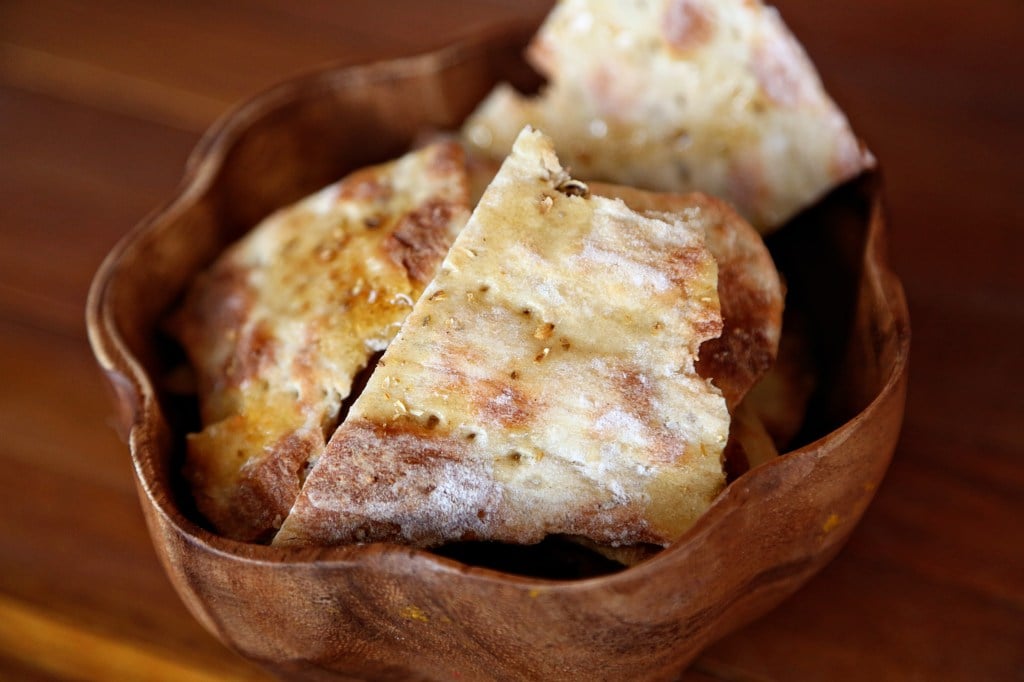
In Exodus chapter 16, God provides. Every morning, thin flakes of a bread-like substance carpet the ground.
The Israelites never actually come up with a name for this free meal. In the Hebrew language the words “What is it?” are ma nah. Thus the word “manna” literally means, “whattyacallit.”
For the next 40 years, throughout their wilderness wanderings, they will gather whattyacallit for breakfast, lunch, and dinner.
More than a thousand years later, Jesus would remind his followers about this miraculous gift of bread. When the disciples say, “Lord, teach us to pray,” he instructs them to ask, “Give us today our daily bread.”
The word “daily” in Greek is epiousion. For centuries, no one really knew what the word meant. Then archeologists found it on broken shards of pottery that ancient housewives appear to have been using as grocery lists. It turns out that epiousion means “what I need for this day only.”
In other words, Jesus was telling his disciples (and us), “Trust God to provide exactly what you will need over the next 24 hours.”
No more. No less.
At the end of each day, look back. Where did you find manna?
Even if everything isn’t fine – and it almost never is – what was good today?
Where did God provide the one thing, large or small, that you needed at just the right moment?
No matter what news breaks upon us today, we don’t have to end up spiritually famished.
We can be nourished on the daily bread of discerning something good – and thanking God from the bottom of our hearts.