
To listen to today’s reflection as a podcast, click here
Are you ready for Christmas? During the season of Advent – which annually begins on the fourth Sunday before Christmas and leads up to December 25 – followers of Jesus traditionally look for ways to prepare themselves for the coming of God’s own Son into the world. Throughout December we’ll ponder ways that we can ready ourselves to receive Jesus, once again, into our own hearts.
“I guess I’ll die without being loved.”
So said Pablo Picasso, the 20th century’s most celebrated artistic genius, as he neared the end of his life.
The Spanish painter had had plenty of opportunities to experience “true love.” He was married twice and collected more mistresses than historians have been able to count.
But his relationships with women were disastrous. Picasso’s mother warned his first wife, “I don’t believe anyone can be happy with my son. He’s available for himself and no one else.” The artist’s friends dismissed him as a ravenous monster. He himself declared, “When I die, it will be a shipwreck – as when a huge ship sinks, many people will be sucked down with it.”
As Os Guinness notes in his book The Call, Picasso was right. When he died in 1973 at the age of 91, three of those closest to him took their own lives: his second wife, one of his mistresses, and a grandson. Two other individuals went mad.
As Picasso flitted from relationship to relationship like a butterfly sampling flowers, he acknowledged that there were only two kinds of women in his life: goddesses and doormats. After graduating from the first category, every woman he knew would ultimately be condemned to the second.
A devotee of the philosopher Friederick Nietzsche, Picasso embraced the notion that God, or at least the idea of God, was utterly dead and gone. He was heard to mutter, “I am God, I am God.”
In a Parisian café in 1943, the 61-year-old artist encountered Francoise Gilot, a 21-year-old art student. They began a nine-year-long affair that produced a son and a daughter.
“Women are machines for suffering,” he told her early on – not the most romantic pick-up line.
On one occasion, he steered Gilot into a church. He guided her towards a dark corner of the sanctuary. “You’re going to swear here that you will love me forever!” he announced. “Why here?” she protested. She pointed out that she could make such a commitment anywhere. “Better here than anywhere else,” he replied. “You never know. There may be something about all that stuff about churches.”
They both swore their eternal love, then walked away. A few years later their relationship was finished.
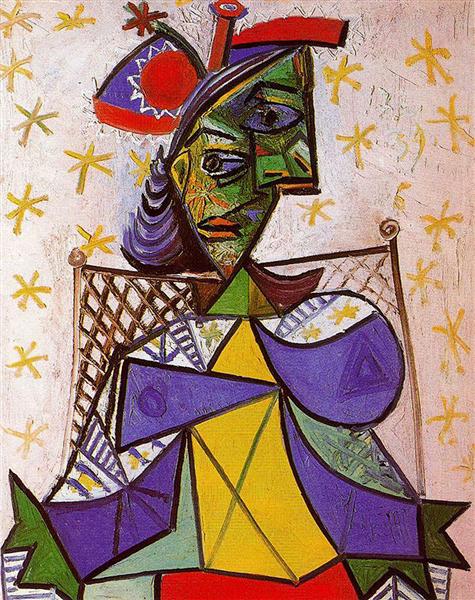
Guinness points out that Pablo Picasso, the world-famous artist and atheist, was also a human being made in the image of God. Like all of us, he yearned for a life of love and meaning. He painted thousands of portraits of women – many of them radically distorted – as he poured out his rage, his disappointment, his self-loathing and callous dismissal of those who could not slake his thirst for happiness.
As bearers of the stamp of God’s own likeness, our hearts cry out for an eternal reference point – Someone who really will love us forever.
In his desperation to experience such love, what brought Picasso to that church? For just a moment, he intuitively recognized that there had to be something bigger than his own vow and the vow of his mistress.
There is indeed something big enough to satisfy our incurable longing for intimacy and belonging. It’s the love that pervades every aspect of the Christmas Story.
Love, however, isn’t always the first thing people notice when they think of God.
We can discern a great deal about God’s character just by pondering the world around us. In Romans 1:20, for instance, the apostle Paul suggests that in creation “God’s invisible qualities—his eternal power and divine nature—have been clearly seen.”
But as author and pastor Timothy Keller once noted, there’s one vital aspect of God’s character that comes to us as an astonishing surprise. That would be God’s love.
When we look at humanity’s long and sordid history – and when we stop long enough to acknowledge our own stunning track records of brokenness – we would never guess, on our own, that God loves us. How could God possibly keep loving such messed-up people?
God doesn’t leave such issues to guesswork. On the pages of Scripture, he tells us about his love. And in the person of Jesus, he shows us exactly what that means.
“For God so loved the world that he gave his only Son…” John 3:16 is rarely celebrated as a Christmas text.
Yet it is.
Love is God’s most glorious trait. It should be ours as well.
This Christmas, God might even use us to help someone else realize that they don’t, after all, have to die without being loved.