
To listen to today’s reflection as a podcast, click here
Throughout the season of Lent, we’re taking a close look at the Apostles’ Creed – one of the earliest and most concise summaries of what followers of Jesus believe.
William Goldman (1931-2018) was one of America’s most cherished storytellers.
Two of his movie screenplays, Butch Cassidy and the Sundance Kid and All the President’s Men, won Academy Awards. He went on to capture audiences with The Stepford Wives and A Bridge Too Far, and put the finishing touches on the screenplay of A Few Good Men.
But his favorite story by far was a romantic romp he dreamed up for his two young daughters. One wanted a story about a princess. The other asked for a tale of adventure.
The result was The Princess Bride, a book (and ultimately a 1987 film) that defies easy categorization. Adults and children have been equally enchanted by the story of Princess Buttercup and Westley, her true love.
As he wrote the original story, Goldman found himself fully engaged emotionally.
In fact, when he chose to let Westley be captured and tortured to death, he began to sob over his typewriter. He realized that he had been rooting for Westley. And now his hero was dead. What could he do?
If you happen to be the author of the story, you can figure out a way to bring someone back to life.
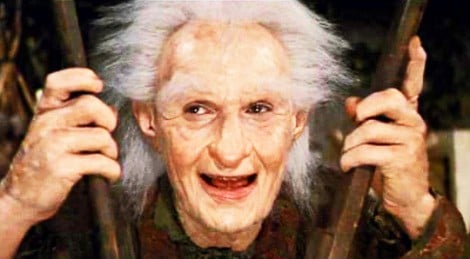
Enter Miracle Max, the wizard with an attitude played in the movie by Billy Crystal. Director Rob Reiner, whom we tragically lost just three months ago, wisely decided to let Crystal, an improvisational genius, run wild with the part.
The comic decided to portray Max as a cross between Casey Stengel, the gruff manager of the New York Yankees in the 1950s, and his Jewish grandmother.
Even though Max is on the screen for less than four-and-a-half minutes, Crystal made the most of the opportunity. Reiner filmed dozens of takes inside the wizard’s cabin. Every one of them was different.
When Max acknowledges, “True love is the greatest thing in the world,” he immediately goes off-script and adds, “Except for an MLT – a mutton, lettuce, and tomato sandwich, when the mutton is nice and lean, and the tomatoes are red, it’s so perky…”
Reiner loved that line so much that he left it in. Cary Elwes, portraying Westley, had the overwhelming challenge of pretending to be dead during all of Crystal’s improvisations. His sudden bursts of laughter, needless to say, erased a number of decent takes.
Here’s what finally ended up in the movie.
Miracle Max has the seemingly impossible job of bringing Westley back to life. But, as he points out, Westley is only mostly dead, and, “there’s a big difference between mostly dead and all dead.”
In the story of the Bible, the hero also dies. Now what?
If you happen to be the author of the Greatest Story Ever Told, you can figure out a way to bring someone back to life – even when the hero is not just “mostly dead,” but certifiably “all dead.”
That seems to be the point of the three words in the Apostles’ Creed that appear, at first glance, to be not particularly important: “dead and buried.” Coming immediately on the heels of the word “crucified,” we would expect nothing less. Right?
Not so fast.
The Christian claims associated with Jesus’ Last Weekend are so extraordinary – that he, as Messiah, sacrificed himself for the sins of the whole world, a history-transforming event validated by rising from the dead – that skeptics have pursued alternative explanations with unusual creativity.
What if Jesus never died?
A British Bible scholar named Hugh Schonfeld suggested in 1965 that Jesus actually conspired with a few trusted allies (including Joseph of Arimathea) to survive the crucifixion. According to The Passover Plot, Jesus intended to fulfill Old Testament prophecy and masquerade as the Messiah.
In order to numb his pain, he arranged to sip a narcotic-spiked drink while hanging on the cross. Jesus’ “plot,” unfortunately, was foiled when a Roman soldier plunged a spear into his side.
Schonfeld was content to conclude that Jesus was merely a sincerely deluded imposter whose dreams came crashing to an end on Good Friday.
Others, however – advocates of the so-called Swoon Theory – have suggested that Jesus somehow survived the horrors of the Roman scourging, impaling by iron nails, and exposure for six hours on a wooden stake, fooled the Roman execution squad into thinking he was dead, “came to” in the coolness of the tomb, miraculously managed to push aside the boulder covering the entrance, and then appeared triumphantly to his friends, who concluded he had conquered Death and launched God’s new creation.
That string of events is so unlikely that the vast majority of historians, including hard-boiled skeptics, have concluded that the Swoon Theory can be safely set aside.
What if Jesus was never buried?
Victims of crucifixion – whether traitors, slaves, or brigands – were typically thrown into unmarked graves. Sometimes their bodies were surrendered to wild animals or roving dogs.
The Gospel accounts go out of their way to insist that Jesus’ body was, in fact, quite lifeless – and that it was respectfully retrieved by the aforementioned Joseph, a wealthy member of the Sanhedrin who secretly admired Jesus. The body was wrapped in burial cloths and placed in Joseph’s own tomb.
One of the most telling details of the Jesus Movement’s earliest days is that Jesus’ tomb never became a holy site, a place of pilgrimage for devoted followers.
The church at large actually lost track of where Jesus was buried. To this day, doubt remains as to the specific site.
Of course, one of the reasons that Jesus’ tomb never became a Must-See Destination for his followers is that there was nothing to see there. Jesus’ remains were no longer behind that large stone.
A few days from now, we’ll be considering the Creed’s assertion that Jesus was, and still is, alive and well on the other side of the first Easter.
Not only that, he is considerably more gifted than Miracle Max – someone who can resurrect dead relationships, dead hopes, dead dreams, and dead hearts.
Inconceivable?
Those who trust Christ have discovered over the centuries that such miracles may actually be said to be inevitable.