
To listen to today’s reflection as a podcast, click here
The funeral of America’s seventh president turned out to be a surprisingly memorable event.
Andrew Jackson died on June 8, 1845, at the Hermitage, his private residence outside Nashville, Tennessee. Thousands came to pay their respects to the two-term chief executive and military hero. There was a solemn procession followed by hours of public viewing.
Then came the religious service – which, unexpectedly, included some not-so-religious swearing.
Funeral attenders were shocked by outbursts of profanity.
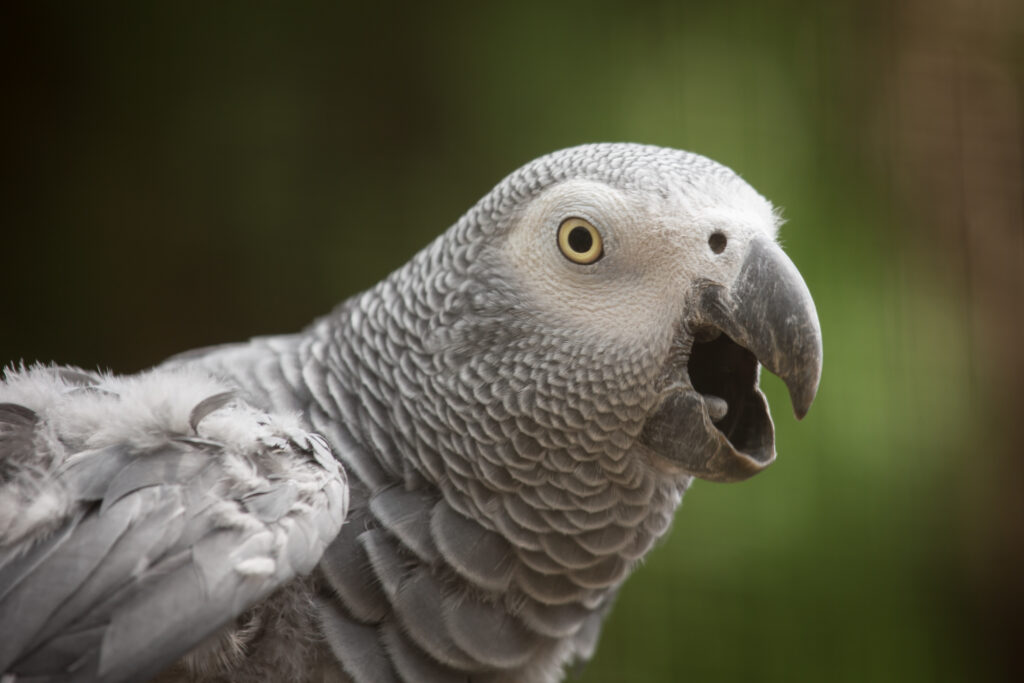
The source? That would be the deceased president’s beloved pet bird.
Poll (or Polly) was a grey parrot Jackson had given to his wife Rachel as a special gift. Tragically, Rachel died the year before he began his first term in the White House. Throughout his eight-year bachelor presidency, Old Hickory kept close tabs on Poll, who had remained at the Hermitage.
When Jackson returned to Tennessee, the parrot served as a living reminder of Rachel’s spirit. He loved her fiercely.
He also discovered that Poll more than lived up to the grey parrot’s reputation for mimicking human speech. Jackson may have been a consummate politician, but his language was anything but politically correct. Poll mastered a veritable lexicon of vulgarities and apparently thought reciting them at her master’s service was the ideal way to honor him.
Reverend William Menefee Norment, who was present at the funeral at the age of 15, later recollected that Poll “got excited and commenced swearing so loud and long as to disturb the people and had to be carried from the house” (original emphasis).
Words are powerful things.
Once they are set loose, you just never know when, where, and how they might return.
Both Old and New Testaments bristle with warnings and encouragements concerning human speech. Jesus famously declared, “What you say flows from what is in your heart” (Luke 6:45).
Speech is the most frequently addressed subject in the book of Proverbs. Since our mouths faithfully reveal the condition of our hearts, Solomon and his fellow authors frequently urge us to exercise caution, restraint, and (when all else fails) silence. Check out these examples:
“A word spoken at the right moment – how good it is! (15:23). “Whoever guards his mouth and tongue keeps his soul from troubles” (21:23). “A perverse person stirs up conflict, and a gossip separates close friends” (16:28).
No one enters a long-term love relationship hoping that it will degenerate into whining and complaining: “It is better to live in a desert than with a contentious and vexing woman” (21:19). But it happens, one negative comment at a time, until spouses can’t even remember when they didn’t dwell somewhere in the Relational Dark Side. And just to be clear: There are plenty of contentious and vexing men out there, too.
The upside and downside of the words we speak are clearly contrasted in a single proverb.
Proverbs 12:18 begins, “Reckless words pierce like a sword…”
Thoughtless comments can dash someone’s dreams. Foolish attempts at humor can wound someone’s spirit. Angry outbursts can crush a child’s confidence that the world is a safe place.
But the second part of Proverbs 12:18 opens the door to a whole new world: “…but the tongue of the wise brings healing.”
Our voices can heal. A kind word can reassure a colleague that their mistake isn’t going to derail the whole team. A word of appreciation can warm someone’s heart on a chilly spring day. “I love you,” “I forgive you,” and “I’m so grateful for you” have the power to do what a hundred physicians can never do: restore a soul.
Just as we can incrementally descend into debilitating habits of speech, we can also incrementally – one comment at a time – begin to cultivate lifelong habits of healing.
Our words can provide the precious gifts of forgiveness, assurance, and encouragement: “Gracious words are a honeycomb, sweet to the soul and healing to the bones” (Proverbs 16:24).
All of us, in the end, have the amazing power and privilege of choosing what we will say today.
Where do we begin?
When in doubt, remind yourself that the one thing Polly wants more than a cracker is a sincere word of hope.