To listen to today’s reflection as a podcast, click here
With its geysers, bubbling hot springs, grizzly bears, and herds of bison, Yellowstone National Park has always been a special place.
Yellowstone’s significance, however, has undergone a bit of a transformation in recent years.
Geologists have begun to grasp that America’s most famous park sits atop a “hot spot,” a thin place in the earth’s crust where a magma dome occasionally rises to impose its will on the neighborhood.
Interestingly, the hot spot hasn’t always been in the northwest corner of Wyoming.
It first showed up in Oregon about 16 million years ago and has migrated slowly across the state of Idaho to its present location.
Actually, the hot spot itself has never budged. But the massive North American tectonic plate has been gliding almost imperceptibly right above it. It continues to move at the rate of about an inch a year (approximately the speed of our fingernails’ growth) in a generally southwesterly direction.
The good news is that a few million years from now, Yellowstone National Park will be just up the road from my home here in central Indiana.
The bad news is that between now and then the hot spot is likely to continue erupting catastrophically, something it’s been doing every 630,000 years or so.
Geologists agree that whenever Yellowstone goes into its next super-volcano mode, everybody within 1,000 miles is going to have a really bad day.
Some estimate that volcanic ash would not only bury the entire Midwest (the world’s largest and most productive agricultural zone) but would trigger a global winter that might threaten human survival.
In case you haven’t been watching the Discovery Channel lately, it just so happens that Yellowstone appears to be at the end of one of its 630,000-year cycles.
For science journalists, this is exciting stuff. For online news editors, the temptation to write “click bait” teasers is almost irresistible.
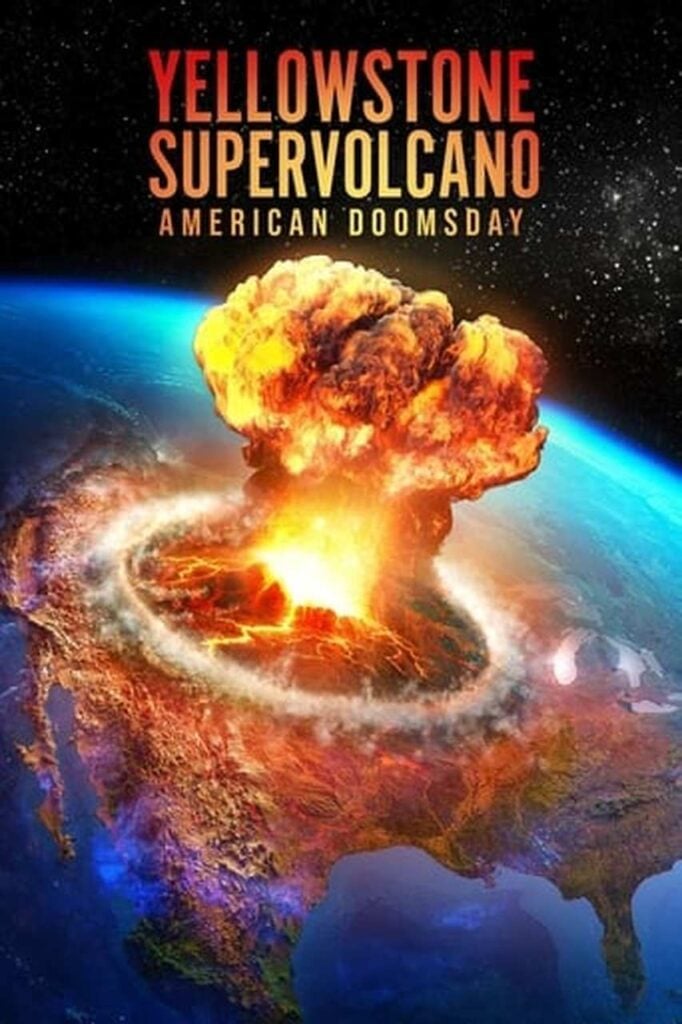
Fear-inducing headlines (One billion could die! If you survived, where would you live?) read like posters for a movie in which Tom Cruise or Bruce Willis alone can save us. The image above identifies Yellowstone as American Doomsday.
As if we need more evidence that terror makes people pay attention, here’s a recent teaser for the Weather Channel app: “One day the sun and earth will die; tap here to find out when.” That’s quite a departure from “overnight showers expected in your area.”
The late Douglas Adams, author of The Hitchhiker’s Guide to the Galaxy and satirical pieces like The Long, Dark Tea-Time of the Soul, suggested that someone facing cosmic disaster needs to heed just one piece of advice:
Don’t panic.
Followers of Jesus would agree.
In one fashion or another, the world as we know it is going to end. There’s nothing we can do about it. We are fundamentally helpless before geological and astronomical processes that we are only just beginning to understand.
But even though the earth has been regularly subjected to history-altering calamities, there are two reasons not to become emotionally paralyzed.
The first is that while the hot spot underneath Yellowstone is always seething, the odds that an eruption will happen between now and Thursday are vanishingly low.
The park’s official geological website reports 61 earthquakes of varying intensities during last month alone. Is that normal? Yes. But it sure generates anxiety-inducing headlines.
It would be a shame to sacrifice our peace of mind because of what-if stories.
The second reason is far more compelling. Deuteronomy 33:27 reminds us, “The eternal God is our dwelling place, and underneath are the everlasting arms.”
God’s arms represent his unbroken care – his supervision of every circumstance.
God’s arms are underneath the magma. And underneath the fault lines. And underneath the tectonic plates that are carrying us, so very slowly, on our ride across the surface of the Earth.
God’s arms are also underneath your calendar this week. And that upcoming crucial conversation. And your family. And your latest MRI. And your hopes for the future.
There’s no place you can go, nothing you can do, or nothing that can happen to you today or tomorrow that will possibly alter that fact.
Douglas Adams got it right:
Don’t panic.
Underneath whatever you are facing this week, God has you in his grip.