
To listen to today’s reflection as a podcast, click here
Are you ready for Christmas? During the season of Advent – which annually begins on the fourth Sunday before Christmas and leads up to December 25 – followers of Jesus traditionally look for ways to prepare themselves for the coming of God’s own Son into the world. Throughout December we’ll ponder ways that we can ready ourselves to receive Jesus, once again, into our own hearts.
“Radio has no future. Heavier-than-air machines are impossible. X-rays will prove to be a hoax” (Lord Kelvin, widely regarded as the world’s brightest scientist in 1899).
“The [atomic] bomb will never go off. I speak as an expert in explosives” (U.S. Admiral William Leahy).
“The horse is here to stay, but the automobile is only a novelty, a fad” (the president of Michigan Savings Bank warning people not to invest in cars in 1903).
“Television won’t be able to hold on to any market it captures after the first six months. People will soon get tired of staring at a plywood box every night” (Darryl Zanuck of 20th Century Fox, predicting in 1946 that “idiot boxes” in people’s homes would never compete with movie theaters).
Want to bring a smile to future generations? Then declare with certainty that something cannot possibly happen.
More than a few of the world’s most enlightened minds have suffered that embarrassment. Even Albert Einstein wrote a paper in 1939 in which he “proved” that black holes could never form. Today it’s estimated that as many as 40 quintillion exist in the observable universe, including the massive black hole at the center of our own Milky Way galaxy.
In the words of physicist Niels Bohr, “Prediction is very hard to do. Especially about the future.”
Theoretical physicist Michio Kaku, in his 2008 bestseller Physics of the Impossible, suggests that most generations are blinded by what merely seems impossible due to the limitations of their current knowledge and technology.
Our great-grandparents, for instance, could never have imagined some of the things we take for granted. Color images that travel thousands of miles in a few seconds and are captured on handheld devices? Transplanting organs from one human being into another? Hot pizza delivered to your front door in 30 minutes or less?
Kaku divides the realm of the impossible into three categories.
Class I Impossibilities are things that are beyond our reach today, but don’t violate any known laws of physics.
These would include invisibility, teleportation, and starships that can take human beings far beyond our solar system. Kaku believes such innovations might be operable by the end of the 21st century.
Class II Impossibilities are things that seem truly incredible, but which may be attainable if humanity sticks around for another million years or so.
These would include time machines, plunging through wormholes, and traveling faster than light (“jumping into hyperspace,” as science fiction movies put it).
Class III Impossibilities, according to Kaku, are truly impossible.
Will we ever be able to invent a perpetual motion machine – a device that can run forever because it generates more energy than it uses? Nope. In the words of Scotty, chief engineer on the Starship Enterprise in Star Trek, “I canna’ change the laws of physics, Captain!”
What about spiritual impossibilities? Are there certain things God simply cannot do?
We know from Hebrews 6:18 that God cannot lie or break his promises. It is impossible for God, in other words, to violate his own character.
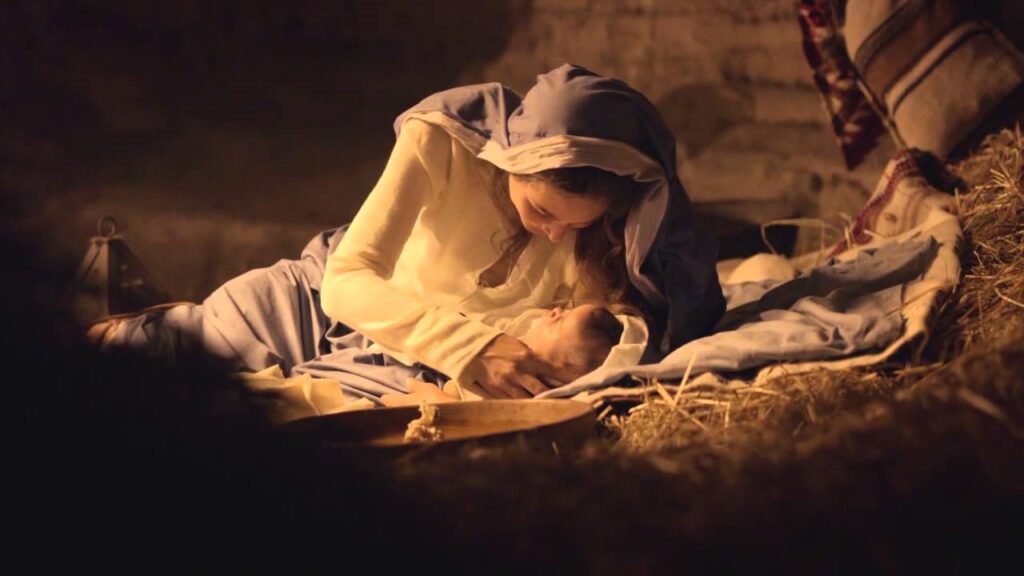
But then we come to the heart of the Christmas story. When the angel Gabriel announces to Mary that she is going to become the mother of the Messiah, even though she is a virgin, he adds this line: “For nothing will be impossible for God” (Luke 1:37). Nothing, that is, when it comes to exerting his power and fulfilling his eternal purposes.
Mary doesn’t blink at what God is asking her to do. But she is puzzled as to how God can take this amazing step within the boundaries of biology and physics. “How is this possible?”
God can do what we cannot imagine. He isn’t fazed by our limitations.
Which means Christmas can be a great time to face what you may have come to believe is impossible.
That you will ever feel happy again.
Or ever get out of debt.
Or find a job that you actually love.
Or reconcile with a family member.
Or organize terminally cluttered closets.
Or trust God in spite of lingering doubts.
Or forgive that monster who changed all of your tomorrows.
Don’t lose heart. With God, there are no classes of impossibilities.
The impossible, after all, has already happened.
That’s why we’re celebrating Christmas.