To listen to today’s reflection as a podcast, click here
Last week, Mary Sue and I finally got around to having The Talk.
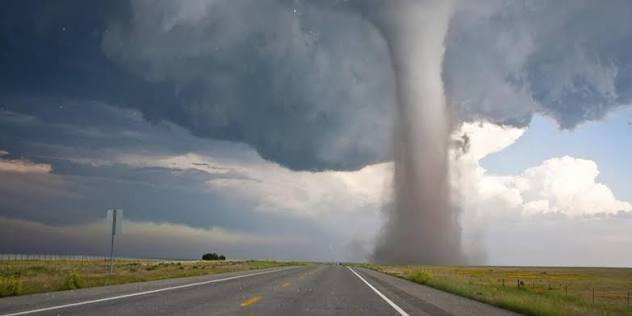
Midwesterners know that at some point they need to sit down and have a serious conversation about where they will take shelter in the event of an approaching tornado.
My wife and I have lived on our current property for the last year and a half – a central Indiana farm that looks as if it could have provided stock footage for the movie Twister or one of its cinematic imitators. Until a few days ago, we hadn’t resolved whether we would head for our crawlspace or an interior first-floor room, and what “must-haves” we would try to grab along the way.
These issues have taken on greater significance this June – a month in which storm fronts appear to be using our state for target practice.
Indiana typically welcomes 22 funnels a year. At the beginning of this month, there had been eight confirmed Hoosier tornadoes in 2026. Since then, weather forecasts have been considerably more exciting. Our state has now registered a whopping 70 tornadoes, and we’re still in the thick of the cyclonic season.
Yesterday the Chicago Tribune reported that our neighbor state of Illinois has experienced 147 tornadoes this year – a most unwelcome all-time record.
How do these storms originate?
Masses of warm air coming up from the Gulf of Mexico routinely collide with cold fronts sweeping down from the Rockies. The result, especially in the Great Plains states of Kansas and Oklahoma, are storms that can literally pack more punch than nuclear weapons.
Tornadoes aren’t just destructive. They’re unpredictable.
Hurricanes, which are immensely larger, can be anticipated days in advance. Satellites and ever-improving ground-based technologies have helped meteorologists pinpoint when and where ocean-going storms will make landfall, and how high the storm surge is likely to be.
Tornadoes are different. The National Weather Service may have a general sense that a particular day might produce a cyclonic outbreak. But no one has yet been able to specifically predict where a dangerous storm might strike, and whether it will produce one small funnel or a dozen gigantic ones.
Thus Mary Sue and I find ourselves gazing at flat screens that single out our county with dramatic colors, watch boxes, and warnings like “Enhanced Risk of Severe Storms.”
Clint Eastwood’s words from Dirty Harry come to mind. “You’ve got to ask yourself one question: ‘Do I feel lucky?’ Well, do ya, punk?”
As Michael Lewis points out in his book The Coming Storm, millions of people who live and work in America’s tornadic “strike zone” apparently feel very lucky indeed. That’s because they have concluded that the next killer twister will probably hit somebody else’s house.
Oklahomans, in particular, say they feel secure for a number of head-scratching reasons.
Some people claim that tornadoes always follow highways – and they’re in good shape because they don’t live near a highway. Others feel confident because tornadoes have never struck their local Indian burial grounds. Still others point out that funnels seem to dissipate before crossing a particular river. Those on the east side of large communities feel better than those who live on the west side because twisters usually come from the west. East-siders assume they will be protected by tall downtown buildings.
Meteorologists are quick to point out that tornadoes aren’t remotely fazed by interstates, cemeteries, or skyscrapers.
When it comes to rapid cloud rotation, the real action is determined by conditions in the atmosphere, not by realities on the ground.
What’s the most urgent need for living in a tornado-prone part of the world at this time of year? It’s not terror or paralysis, but an appropriate fear – a deep-seated respect for weather service warnings that will lead people to make wise choices that may well save their lives.
The same thing is true when it comes to our spiritual well-being.
We know, for instance, that we’re all going to die. Barring the imminent return of Christ, there’s no chance that any of us is going to get out of this place alive.
We know that’s a true statement. And we regularly receive reminders that it’s true – sometimes even dramatic “warning sirens.” But mostly we live as if death is something that will happen to other people, but not to us. At least not today.
Since each of our lives has an expiration date, and one day we will have to give an account of ourselves to God, what’s the need of the hour?
The Bible’s answer may surprise you. It’s fear – an appropriate fear – a deep-seated respect for God that will lead us to make wise decisions concerning the conduct of our lives. “The fear of the Lord is the beginning of wisdom” (Proverbs 9:10).
It’s amazing that Scripture never once tells us to fear the devil. We are not to fear evil. There is no need to fear death. Jesus tells us not to be afraid of people who are seriously intent on harming us. (Matthew 10:26-31).
But spiritual health is all about cultivating an appropriate fear of God. That’s not to be confused with spiritual paralysis or a sense of servile terror. “Fearing God” means choosing to take God seriously – embracing with joy his promises of mercy and grace, even while heeding his warnings when we’re tempted to succumb to disastrous choices.
To paraphrase Augustine, the church’s first great theologian, life really comes down to just two choices: We can either fear God or fear everything else.
That’s a wonderful thing to remember on sunny days.
Not to mention when storm clouds are gathering on the horizon.