To listen to today’s reflection as a podcast, click here
A Star Trek character named Gary Mitchell made only one on-screen appearance in the TV series.
Sixty years ago, he was featured in an episode titled “Where No Man Has Gone Before.”
A one-show storyline may seem brief and humble, but it’s recently blossomed into something momentous.
Mitchell, played by actor Gary Lockwood, is introduced in the episode as one of the Enterprise’s senior officers and a longtime friend of Captain Kirk. When the starship breaches the Galactic Barrier, Mitchell is bombarded by a mysterious form of energy that endows him with superior intellect and godlike powers.
The transformation clearly doesn’t make him a nicer human being. Mitchell becomes insufferably arrogant and cruel, even threatening the lives of his crewmates. “You fools!” he shouts, “I’ll crush you like insects.”
Kirk cleverly manages to strand his old friend on an empty and barren planet, where he is summarily abandoned.
End of the story? In the Star Trek universe of obsessive fandom, not a chance. Even though the series enjoyed just three seasons of its original five-year mission to explore the cosmos, a number of media sources continue to extend the show’s official narrative.
That includes a richly illustrated series of comic books.
Four years ago, Star Trek #400 broke the news that Gary Mitchell not only survived on his barren planet but has become a creator. He has evolved into a divine being capable of fashioning his own solar system.
But that’s just the tip of the iceberg. The storyline asserts that Mitchell’s evolution is the destiny of every human being. According to Star Trek mythology, all of us will one day becomes gods. At the end of history, humanity will have “earned rest.”
If all this sounds vaguely familiar, check out Genesis 3:4-5, where the serpent chats with Eve about the consequences of thumbing her nose at God’s authority: ‘You will not certainly die,’ the serpent said to the woman, ‘For God knows that when you eat from it your eyes will be opened, and you will be like God, knowing good and evil.’” What could possibly go wrong?
You will be like God. It’s a very old dream – the original temptation.
If the musings of Star Trek strike you as downright silly, consider the recent ponderings of Israeli author and historian Yuval Noah Harari, who has become a noted public intellectual.
Harari observes that throughout the course of human civilization, plague, famine, and war have always threatened to wipe us from the face of the earth.
In the 21st century, however, most people won’t have to spend all their days worrying about that triad of loss and despair. Yes, there are still wars. But they are relatively localized. Famine and plague are still around, too. But they are essentially hit or miss, and we have learned how to beat them back.
So what should we work on now?
In his provocative 2015 book Homo Deus: A Brief History of Tomorrow, Harari suggests that our next project will be endeavoring to become gods.
He’s not kidding.
Men and women, who have always dreamed of experiencing greater happiness and much longer lives, suddenly find themselves within technological reach of those ancient goals. “In seeking bliss and immortality,” says Harari, “humans are in fact trying to upgrade themselves into gods.”
This brave new world has a dark side, however.
Harari admits that only the privileged few will actually get to reach for godlike powers. Most of humanity will be left behind. He imagines a train in which there are first class cars up front, carrying those with enough money, education, and clout to take advantage of genetic and biological engineering.
A few others occupy the second-class cars, followed by billions of people who are crowded into the rest of the train. It may be, writes Harari, that the Haves will simply disconnect their cars from the Have Nots and choose to pull away.
New York Times columnist Jennifer Senior suggests that Harari’s vision is “a future that looks like Westworld rather than Disney World. A small, breakaway republic of superhumans and techno-elites” – those who acquire the skills and services to re-engineer their brains and bodies – “will become gods; those who don’t will be rendered economically useless and die off.”
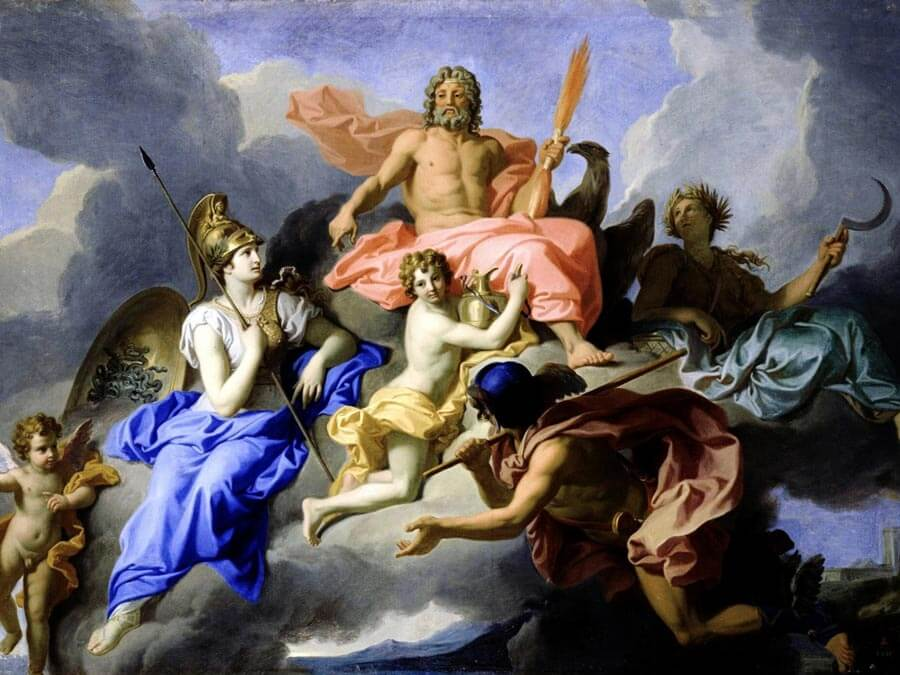
Before we start looking for house listings on Mt. Olympus, it might also be worth remembering what the Greeks of the classical era had to say about their deities.
It’s hard to imagine an unhappier bunch. The gods and goddesses of the ancient world were incurably petty, jealous, vindictive, insecure, and childish. Even though they had it all, they were utterly miserable. A contemporary equivalent might be a room full of celebrities.
More than 2,500 years ago, the Greeks recognized that super-powers do not produce super-character. Let alone super-happiness.
“Becoming divine” is the dream that will not die. For centuries, people have fallen back on the notion that if God just surrenders the steering wheel and lets us take over, life will go so much better.
Things did not turn out well for Adam and Eve, of course.
And as history attests, the aspiration of divinity always proves disastrous for the rest of us, too.
It’s time for us to boldly go where far too few of us have gone before:
That would be choosing a life of grateful obedience to the One who really is God.