
To listen to today’s reflection as a podcast, click here
Throughout the season of Lent, we’re taking a close look at the Apostles’ Creed – one of the earliest and most concise summaries of what followers of Jesus believe.
Extraordinary figures are often associated with claims of extraordinary births.
The Egyptian god Amun, masquerading as a human being, was said to have placed an ankh – a sacred symbol of life – on top of the nose of Queen Ahmose, who promptly conceived the female pharaoh Hatshepsut.
The Indian god Mithras was said to have emerged from solid rock.
Devotees of the mythical Yellow Emperor of China claimed that he was conceived in his mother’s womb when she was struck by a bolt of lightning originating from the Big Dipper.
According to Greek mythology, Zeus had a dalliance with the goddess Metis. When she reported her pregnancy, the king of the gods feared that her child might be mightier than himself. So he swallowed her. Metis gave birth anyway. Her daughter Athena sprang, fully grown, from Zeus’ forehead, wearing armor and bearing a sword. Most of the other Olympian deities would indeed come to experience the volatile Athena as the Mother of All Headaches.
Real-life historical figures floated their own amazing birth narratives. Alexander the Great and the emperor Augustus both claimed to have been virgin-born, fathered by either a serpent god or Apollo.
It seemed inevitable that the earliest Christians would insist that Jesus, God’s only Son, would enter the human race in some extraordinary fashion.
That idea is on prominent display in the Apostles’ Creed, which declares that Jesus “was conceived by the Holy Spirit” and “born of the Virgin Mary.”
Christians, however, add this twist: In Jesus’ case, we’re not talking about mythological or narcissistic embellishment. Jesus’ virgin birth really happened.
No, really.
We’ll explore that claim, and Mary’s special role, in greater detail tomorrow. Today let’s consider what the Creed says about the Holy Spirit as the divine agent of conception.
That takes us all the way back to the Bible’s opening words in the book of Genesis.
The Hebrew word ru’ach and the Greek word pneuma, which are translated “spirit” in the Old and New Testaments, respectively, both serve triple duty linguistically. They also mean “breath” and “wind.” Thus God’s Spirit can be understood as the very breath of God.
In Genesis chapter one, God breathes creation into existence.
“In the beginning, God created the heavens and the earth. Now the earth was formless and empty, and darkness was over the surface of the deep, and the Spirit of God was hovering over the waters” (Genesis 1:1-2).
This remarkable snapshot from the beginning of the cosmos may well be echoed in the words of the angel Gabriel to Mary. When she asks how in the world she can possibly bear a child if she is still a virgin, he replies, “The Holy Spirit will come on you, and the power of the Most High will overshadow you. So the holy one to be born will be called the Son of God” (Luke 1:35).
The Spirit hovers, overshadows, or broods over the waters of creation, seemingly ready to breathe the breath of life into everything God has made.
In Genesis 2:7, God forms the first human being from the dust of the ground, breathing life into his nostrils – “and man became a living being.” In the same way, God himself becomes a living human being within the womb of a Jewish peasant girl.
This breathing-out by the Spirit is not just a one-time act of creation. It can also be a re-creation of our life with God, as many times as our inner worlds become empty and dry. In Ezekiel 37:1-10, the prophet looks down upon an utterly disheartening valley of dry bones. That’s what faithless Israel has become. “There was no breath in them.”
But when God blows upon that skeletal heap, “they came to life and stood up on their feet.” The breath of God’s Spirit means there is always hope of a different kind of tomorrow.
When Jesus stands before his confused and fearful disciples after his resurrection, he breathes on them and says, “Receive the Holy Spirit” (John 20:22) – a gift that will explode into its fullest dimensions at Pentecost.
And Paul tells us that Scripture itself is theopneustos, a fascinating, made-up word that means “God-breathed” (2 Timothy 3:16).
We may say that that Scripture inspires us. But theopneustos is not making a claim about the Bible’s effect on its readers. Instead, it’s asserting that every time we hold a Bible in our hands, we’re clutching something that was breathed out from the very heart and mind of God.
This, of course, may seem quite interesting, from a theological perspective. But will the fact that the Spirit is the breath of God make any real difference to you and me over the next 24 hours?
Let’s return to an observation we’ve made several times in the past – the way in which God introduces himself to Moses in Exodus 3.
Moses is shaking in his sandals. Who, exactly, is this mysterious Presence speaking to him from a burning bush?
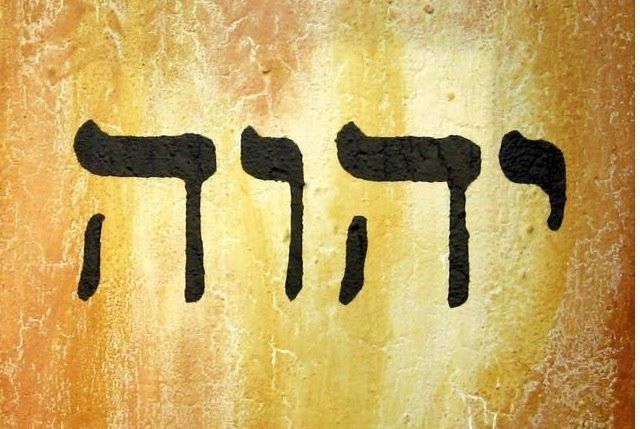
God identifies himself with four Hebrew letters: YHWH. No one knows precisely what they mean, or even how they should be pronounced. Most Bible students opt for Yahweh, and believe that God’s personal name should be translated, “I am who am.”
In other words, God is God and we are not. He is the ultimate Being in the cosmos. Others prefer, “I am who I am.” That is, “Moses, who I am is none of your business.” This would be an expression of God’s impenetrable identity. Still other scholars believe Yahweh means, “I will be there with you,” or “I am all you need.”
The simplest and perhaps most compelling insight is that God may have wanted his people to think about him every time they took a breath.
Try it. Breathe in: Yah. Breathe out: Weh. “Yah-weh.”
The consonants in YHWH are the only ones in Hebrew in which the speaker doesn’t use the tongue or close the lips. All the other consonants – such as P, K, T, B – explode off the lips or teeth, or spring from the back of the throat. But Yahweh can be said effortlessly. It’s as easy as breathing in and breathing out.
God’s name, in fact, may represent a constant reminder that he is the One, by means of his Spirit, who keeps us breathing.
Farther Richard Rohr has made an intriguing suggestion. The Franciscan priest notes that the first word spoken by every human being, the world over, is the sacred name of God. The first breath of every newborn baby is God’s personal identity. And just in case you’re anxious about what you should pray just before you die, don’t worry. With your last breath you will speak God’s name.
Rohr goes on to say that there isn’t a Catholic way of breathing or a Protestant way or an Orthodox way or an English way or an American way.
There’s just breathing.
You’ve done it your whole life – on average, about 20,000 times a day, whether awake or asleep.
And as we catch our breath going from one moment to the next one, we can choose to remember that the Spirit who overshadowed a trusting peasant girl, bringing Jesus into the world, is sustaining the life within you and me right now.