
To listen to today’s reflection as a podcast, click here
It’s amazing how many interesting historical events have been impacted by the flip of a coin.
In 1845, Asa Lovejoy and Francis Pettygrove decided that a coin flip – actually, the best two out of three – should determine who got to name their new settlement in Oregon. Pettygrove won. “Portland!” he declared. If things had gone Lovejoy’s way, the thriving city along the Columbia River would have been known as Boston.
Speaking of Portland, the Trail Blazers had the second pick in the 1984 NBA draft. The top brass favored two players. Which one should they pick? General manager Stu Inman flipped a coin. As a result, they chose Sam Bowie – a fine basketball player.
If only that coin had landed on the other side. The Chicago Bulls had the third pick in the draft. They selected Portland’s other choice: Michael Jordan.
When it was time for the Beatles to release their first single in 1962, producer George Martin wanted the song “How Do You Do It” to be featured on the record’s A-side. The Fab Four pushed for “Love Me Do.” They flipped a coin. John, Paul, George, and Ringo won. Thank goodness.
Just because you win a coin flip doesn’t mean you end up first.
On December 14, 1903, the Wright brothers flipped a coin to decide who got to pilot the world’s first flight. Wilbur won. But because he stalled the Flyer, it advanced a grand total of only 18 inches. Three days later, Orville flew into history.
In 1969, two horse breeders, Penny Chenery and Ogden Phipps, needed to determine who would assume custody of two of the foals of the legendary racehorse Bold Ruler. They flipped a silver dollar. Phipps won. Sort of. After he made his selection, Chenery was left with Option B, which turned out to be a chestnut-colored horse named Secretariat.
As far as we know, no coins were flipped in the Bible. One reason is that the Hebrews did very little minting of their own coinage, and they were repelled by the sight and touch of Greek and Roman coins – all of which typically bore the image of a king, conqueror, or Olympic deity.
To have a coin in one’s hand, it was believed, violated the spirit of the second of the Ten Commandments – to acknowledge a graven image. More than a few Caesars, after all, presented themselves as divine.
Nevertheless, “casting lots” was common in Bible times.
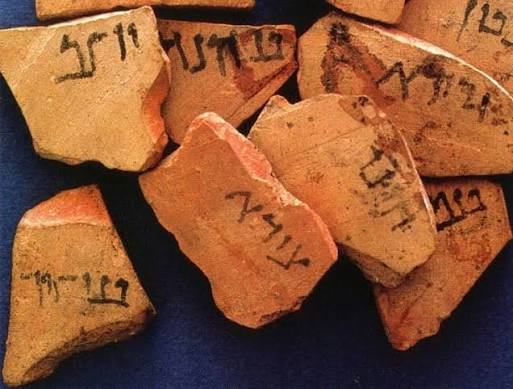
Sticks of different length, stones, or shards of pottery marked differently on opposite sides (like those in the image above), and even dice could be drawn from a container or thrown onto the ground. Since God was the managing director of everything in the universe, it was agreed that he controlled the outcome.
As Proverbs 16:33 puts it, “The lot is cast into the lap, but its every decision is from the Lord.”
Thus we see Joshua casting lots to apportion the Promised Land to the various tribes, priests drawing lots to assign periods of temple service, and the sailors on Jonah’s ship using lots to discern that he was the cause of a major storm. In that case, Jonah lost the “coin toss” and received a memorable opportunity to learn about fish anatomy from an inside perspective.
Nor can we forget that the Roman execution squad at the foot of Jesus’ cross cast lots to see who would get to walk off with his clothes.
One of the most interesting episodes of casting lots on the pages of Scripture is also one of the most overlooked.
At the end of the first chapter of the book of Acts, Peter and the other disciples wrestle with a practical issue: Who should replace Judas? By this time, Judas – having betrayed Jesus to the Roman authorities – had taken his own life in the throes of anguish and regret. Just as there were 12 tribes in the nation of Israel, it seemed to be a given that the leadership team of the “new Israel” of Christ-followers should have a dozen members.
Two candidates are put forward: Matthias and Joseph called Barsabbas. Both had known Jesus intimately. Either would be an admirable addition to the leadership core.
“Then they prayed, ‘Lord, you know everyone’s heart. Show us which of these two you have chosen to take over this apostolic ministry…’ Then they cast lots, and the lot fell to Matthias; so he was added to the eleven apostles” (Acts 1:24-26).
Matthias is never mentioned in the Bible again. But what’s really interesting is that something else is never mentioned in the Bible again: There is no more casting of lots.
Why not? The answer comes in the very next chapter of the book of Acts. God’s Holy Spirit falls upon the entire community of believers – young and old, male and female, apostles and just plain beginning Jesus-followers.
And from that moment on, discerning God’s will becomes a matter not of throwing sticks, dice, or stones, but of combining hard thinking with humble reliance on the Holy Spirit.
The most dramatic example of this emerges from the so-called Jerusalem Council in Acts 15. A host of luminaries – including Peter, Paul, Barnabas, James the brother of Jesus, and many others – gathers to wrestle with the biggest question facing the early church: Does a Gentile first have to become a Jew in order to become a Christian?
The discussion is emotional. The exchanges get personal. A great deal is at stake.
After receiving testimonies from those “out in the field” evangelizing Gentiles, grappling with Old Testament texts, and hearing from those who knew Jesus well, the Council makes a decision: Gentiles are good to go in the kingdom of God, right here and right now, without first joining a synagogue or being circumcised.
Was this decision important? Let’s just say it’s a primary reason Christians have always worshiped on Sundays instead of Saturdays.
The letter communicating the Council’s decision includes these remarkable words: “It seemed good to the Holy Spirit and to us…” (Acts 15:28).
Think how far removed this is from casting lots.
The leaders of your church don’t flip quarters to determine next year’s budget, choose a new staff member, or decide how much water to use in baptism. They study and think and ask questions and fast and pray and sleep on things for a number of nights and then, sincerely inviting the Holy Spirit to have his way, make the wisest decisions possible.
We don’t always get things right. But the more we practice, the more we find out what it means for something to “seem good to the Holy Spirit and to us.”
And it’s a whole lot better than losing Secretariat to the flip of a coin.