
To listen to today’s reflection as a podcast, click here
Each day this month of August we’ll be looking at one of the extraordinary metaphors that the Bible uses to illustrate the nature of our relationship with God.
The Shack, by William P. Young, is a deeply touching novel.
After a young girl named Missy is murdered by a serial killer, her father, Mack, is ravaged by guilt, grief, and rage. What could he have done to prevent her abduction? Why didn’t God do something?
Four years after the worst day of his life, Mack receives a mysterious handwritten invitation to visit the abandoned shack where Missy’s life was taken. The note is signed “Papa” – his wife’s affectionate name for God. Is this some kind of sick joke?
Hoping to find the killer there, and to set things right with whatever force is necessary, Mack instead encounters a trio of individuals who turn out to be the three persons of the Trinity. What follows is a profound exploration of redemption, forgiveness, and divine justice – a story that has resonated with millions of readers.
The book also has plenty of detractors.
Aside from the extraordinary risk of depicting God the Father as a human being, Young dared to depict the Father as…well, as a middle-aged, matronly Black woman.
Critics pounced. Joe Schimmel, a California pastor and host of the documentary, “Hollywood’s War on God,” accused Young of idolatry. He found the author’s “pretentious caricature of God as a heavy-set, cushy, nonjudgmental, African American woman” as deeply offensive. Is God really a celestial version of Oprah Winfrey?
New Testament professor James De Young wrote a scathing review called “Burning Down the Shack.” What in the world was William P. Young thinking?
In truth, what Young was thinking is that this kind of dialogue would be of value in the church. He was careful to point out the difference between God’s ontological identity – who God truly is, with regard to divine essence – and how human beings experience God (as evidenced by the two dozen metaphors we’ve been exploring this month). As if to illustrate that point, before the end of the book Young transforms Papa from a Black woman into a White man.
Years before writing The Shack, Young had failed to keep his marriage vows. He was asked to leave his church.
A week later, the worship leader of his church – a matronly, middle-aged Black woman – pulled into his driveway. “I think they’re making a huge mistake with you,” she said. “I think we need to love you and be in your life… I don’t care what the rest of them do, I’m committed to you and (your wife), and I’m going to be your friend through this.”
Young never forgot that extraordinary moment of grace. At a time when he yearned to hear from God, he experienced hope in the person of a large African American woman – which is why he decided Mack would first meet “Papa” in that disguise.
Young’s point seems to be that God will meet us by whatever means it takes to earn our trust and address our needs.
Here we need to pause and affirm that the God who is revealed in Scripture – Yahweh in the Old Testament and the Father of Jesus Christ in the New – is not female. Then again, God is definitely not male, either. Ontologically – that is, with respect to God’s essence – God is not characterized by gender.
Instead, God is Father. The living God eternally manifests the attributes of fatherhood. God is nowhere said to be Mother, in contrast to a number of the pagan religions that permeated the Mediterranean world into which Christianity was born.
God may not be Mother, but there are noteworthy places in Scripture where God is clearly described as maternal. We see that in Isaiah 49:15: “Can a mother forget the baby at her breast and have no compassion on the child she has borne? Though she may forget, I will not forget you.” Then there’s Isaiah 66:13: “As a mother comforts her child, so will I comfort you.”
God is unequivocally a source of nurture and compassion – two qualities that are traditionally considered maternal and rarely show up as the Manosphere’s greatest hits.
If God is our Father, where do most people get their ideas as to what that might mean?
Our pictures of divine fatherhood tend be a patchwork quilt of old Sunday School lessons; stray comments that we heard years ago from kids on the playground; somebody’s Facebook rant about God letting them down; perspectives from books and movies and retreats; the exhilaration of an answered prayer; the extraordinary experience of being present at the birth of a child; or perhaps the special gift of extended personal study with others who are farther down the path of spiritual maturity.
Truth be told, it’s hard for most people in the West to abandon their default image of God. That would be the muscular, white-haired “grandfather” reaching out to Adam at the center of the Sistine Chapel’s ceiling.
Then there’s the undeniable reality that the way we think about our Father in heaven, for better or worse, tends to be related to how we have experienced our fathers here on earth.
Our earthly fathers may have been encouraging and available – the kind of dads who knew how to balance toughness and tenderness. Or they may have passed along legacies of perfectionism instead of grace, irritation instead of understanding, abuse instead of sacrificial love. Or we may have had a father who for one reason or another was simply not present. Each of those realities helped form our picture of God. Is he a father we can always trust, or someone whose very existence is up for grabs?
It matters what picture of God we cling to. That’s why it matters that we take to heart the picture that Jesus himself presents of his Father in heaven.
That’s something we discover in the story he tells in Luke 15:11-32.
Over the centuries it’s been called the Parable of the Prodigal Son, or the Two Brothers, or the Lost Child, or the Unforgiving Sibling, or the Waiting Father. What we know for sure is that there are three characters. There’s the rebellious kid who runs away and makes a mess of his life. There’s the Goody Two Shoes big brother who stays at home admiring his collection of Sunday School perfect attendance pins. And there’s the father of these two boys, who loves them both and doesn’t give a fig who might think he’s foolish for doing so.
The younger son essentially says to his dad, “Let’s go ahead and pretend you’re dead. Give me right now the inheritance that will come to me when you’re gone.” It must crush this father’s spirit that his son doesn’t want to be in relationship with him.
At first, things go well for this child. Then one day his VISA card is rejected. All that money has somehow slipped through his fingers. What can he possibly do?
He begins to formulate a plan. He’ll play Let’s Make a Deal. Certain that his relationship with his father is broken beyond repair, he rehearses a little speech. “Dad, I don’t even deserve a cot in the storage shed. I know I can’t be your son anymore. Could I at least be one of your minimum wage workers?” He begins walking in the direction of home, no doubt burdened by the thought of trying to clean his own slate for the rest of his life.
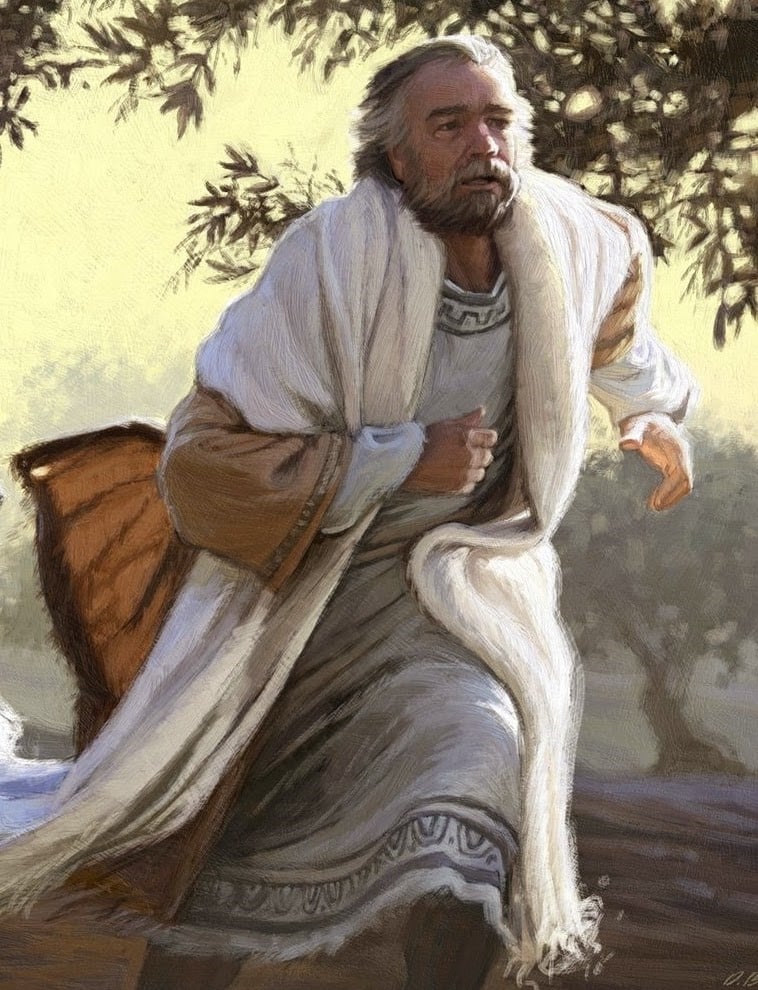
The last thing he suspects is that his father, the very one he has wounded, is about to clean that slate for him. Luke 15:20 tells us, “But while he was still a long way off, his father saw him and was filled with compassion for him; he ran to his son, threw his arms around him and kissed him.”
The astonishing detail is that the father runs. Dignified gentlemen in the time of Jesus walked through their paces slowly. To run meant you would show your ankles to the neighbors. To do that was to risk ridicule.
But this Father could care less. While we ourselves are still a long way off – even while we remain in our distant countries of doubt, anger, cynicism, and hopelessness – God the Father is waiting.
What would it be like to turn toward home? He will run to receive us with open arms. So, who is the main character in Jesus’ story? That’s easy. It’s the father. He’s the main character in all our stories. That’s why the best name for this parable might be The Father Who Never Gives Up.
You may find yourself thinking, “Oh, man, I wish I had a dad like that.”
But if you belong to Jesus, you do have a dad like that.
And your Father in heaven will never surrender his intention to love you, bless you, and welcome you home.