
To listen to today’s reflection as a podcast, click here
Each day this month of August we’ll be looking at one of the extraordinary metaphors that the Bible uses to illustrate the nature of our relationship with God.
“Then Jesus declared, ‘I am the bread of life. Whoever comes to me will never go hungry, and whoever believes in me will never be thirsty’” (John 6:35).
People have been baking bread for thousands of years.
But it sure hasn’t looked, felt, or tasted like Wonder Bread, the loaf that so many Americans grew up eating.
About 500 years ago, European bread-making began to reflect class distinctions. Peasants and laborers ate dark, coarse bread. High class people (that is, “the upper crust”) typically ate loaves made with finely textured, highly refined wheat flour.
Such processed flour produced a lighter-colored loaf. White bread therefore became known as rich people’s bread. Only wealthy people could afford to buy it. Think of Billy Joel singing that his “Uptown Girl” was “living in her white-bread world.”
All that changed in 1921.
The Taggart Baking Company of Indianapolis introduced a loaf made with batter, not dough. It was spongy, inexpensive, and light in color. Best of all, since it was factory-baked, it was untouched by human hands – a big selling point at the time.
One of the company execs named it Wonder Bread. The package featured multi-colored balloons, since he had recently felt a sense of wonder when watching a balloon race staged at the Indianapolis Motor Speedway.
According to Libby O’Connell’s book The American Plate, people from all classes and ethnicities could now feel as if they were privileged. Everyone could afford to buy the lightest-colored bread anyone had ever seen.
Not only that, Wonder Bread was one of the first national brands to be pre-sliced.
As homemakers gradually entered the American workforce at mid-century, few had time to bake their own bread, let alone slice it. Wonder Bread seemed like a wonderful idea.
Gradually, however, it became clear that this new invention and its light-colored cousins that had also hit the market were missing something important – like virtually all the nutrients that make bread such a crucial staple of the human diet.
“Men [and women] shall not live by bread alone,” Scripture says. Or at least Wonder Bread. If you tried to do so, you would place yourself in danger of significant vitamin deficiencies.
Factories – which were bleaching their flour in order to make it super-white – were unwittingly removing critical nutrients. When American young men began to register for military duty in World War II, an alarming number of them were found to be nutritionally impoverished.
By the 1960s, Wonder Bread began adding a dozen vital nutrients back into the factory formula. Thus was born the marketing slogan so many of us experienced as kids: “Wonder Bread builds strong bodies 12 ways.”
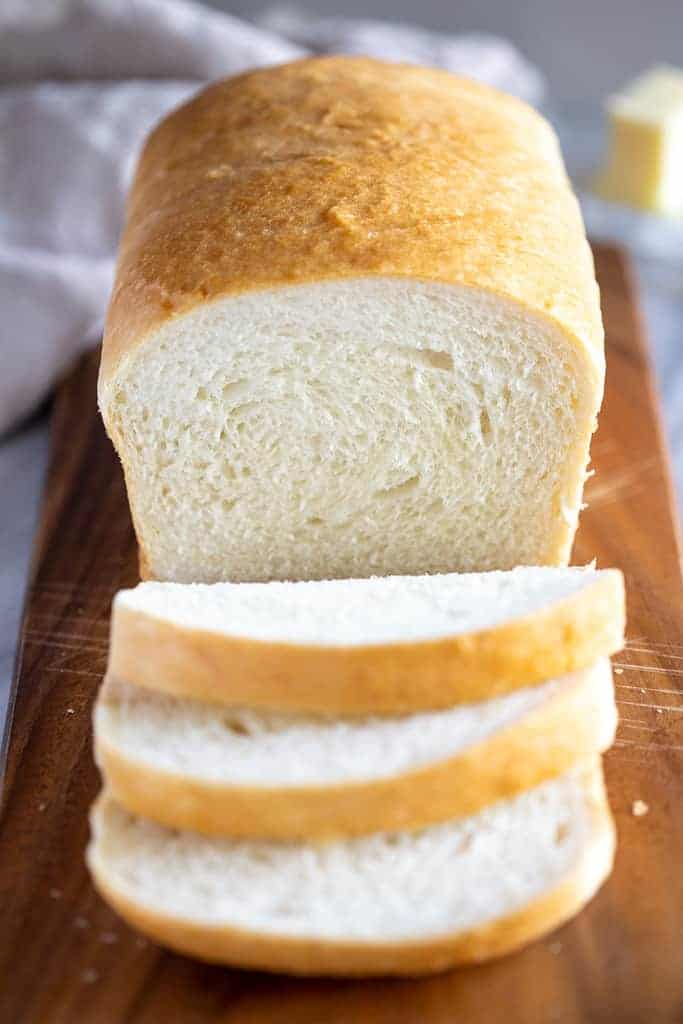
Of course, you could always just eat delicious, dark, whole grain bread with all the natural ingredients intact – which is exactly what American consumers have begun to do in recent decades, along with increasing numbers of pitas, wraps, and tortillas. As a consequence, Wonder Bread’s share of the market has pretty much become toast.
Or maybe you should just skip eating bread altogether: “No, thanks, I’m trying to cut down on carbs.”
That option would have been unthinkable in the ancient world. Bread was the central component of every meal. It was literally the staff and the stuff of life. When Jesus taught his disciples to pray, “Give us today our daily bread,” he was talking to people who were sometimes only one day away from starvation. Bread made all the difference.
All of that provides the background to Jesus’ outrageous claim in John 6:35: “I am the Bread of Life.”
He was essentially saying, “I’m the one thing you need to get from here to tomorrow. Don’t even think about trying to do life without me.”
When Israel had spent 40 years journeying from slavery in Egypt to freedom in the Promised Land, God had provided a daily gift of manna – a bread-like substance that supernaturally appeared on the ground. But Jesus was offering something different – not just 24 hours of nourishment but a feeding that promised spiritual wholeness in this world and the next.
He was offering, in other words, the only meal that can satisfy the longings of the human soul.
It’s a metaphor, of course. So are his other celebrated “I am” statements in the Gospel of John. He is the Light of the World (8:12), the Door (10:7), the Good Shepherd (10:11), the Resurrection and the Life (11:25), the Way, the Truth, and the Life (14:6), and the True Vine (15:5).
Jesus wasn’t saying that he was literally a burning candle, a dusty trail, a wooden plank on hinges, an empty tomb, or a loaf of baked wheat.
But knowing him was the only way to experience what all those things promised: illumination, direction, spiritual nourishment, access to the Father, and hope.
If Jesus is bread – but not really bread – how in the world do we take him in?
There’s the Lord’s Supper, of course, where we literally “break bread” with fellow disciples in the presence of the Lord. Then we invest our lives in studying his words, praying in his name, and relying on the power of his Spirit to love God and love others.
It is, he assured us, the real and only Life.
Which makes it a whole lot better than sliced bread.