
To listen to today’s reflection as a podcast, click here
What does it feel like to be an 11-year-old girl whose family has just moved to a new town?
That’s the premise of Inside Out, the acclaimed 2015 film conceived by Pixar animator Pete Docter.
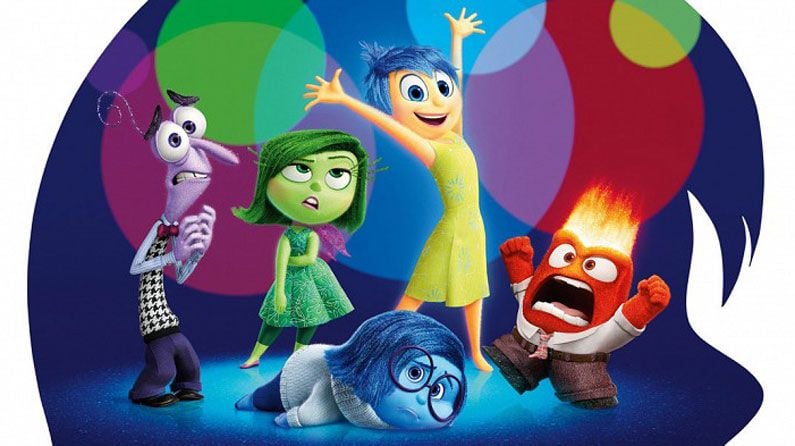
A half dozen years earlier, Docter had been alternately startled, mystified, and intrigued by the changes he saw taking place in his own daughter as she approached adolescence. Inside Out portrays the interactions of five primary emotions – Joy, Sadness, Anger, Fear, and Disgust – inside the mind of Riley Andersen, a pre-teen who has to navigate the complexities of relocating from Minnesota to San Francisco.
Researchers have proposed there may be as many as 27 human emotions. But Docter wisely settled on just five, recognizing he could hardly give meaningful screen time to all the others.
Anger – who is portrayed as a smoldering red character whose hair occasionally catches fire – is memorably voiced by Lewis Black, a comedian who has made his living expressing outrage concerning just about everything.
Riley’s experiences keep evolving as the five emotions take turns at the helm of “Headquarters,” the console that represents her conscious mind. It can safely be said that things usually go better when Joy is in charge, as opposed to Anger’s turn at the board. In his efforts to ensure that Riley gets a fair shake in life, he shorts out the console.
It’s just a movie. And a kids’ flick at that. But Inside Out makes two great points about anger.
First, anger definitely deserves a place in our consciousness. And second, it’s a bad idea to let anger try to run things at HQ.
It’s an understatement to say that rage is bubbling just beneath the surface of our culture, and that it routinely erupts into painful confrontations – not only between family members and friends, but increasingly, it seems, between total strangers in traffic jams and town hall meetings.
Anger overtakes public discussions of immigrants and enforcement, journalists and “fake news,” judges and primaries and budget shortfalls and gerrymandered Congressional districts.
It’s a mad, mad, mad, mad world.
In his book God’s Wisdom for Navigating Life, Tim Keller asserts that anger clearly has a role to play in our lives. “Anger is energy released to defend something you love,” he affirms. But then he adds, “The problem with human anger is this – we tend to love the wrong things.
“It is not wrong to value your name and reputation, but if you love them too much, there will be inordinate anger that essentially is just a defending of your ego.
“Parents may get inordinately angry at children mainly because the children embarrassed them before others. Because our loves are confused and out of order, our anger – basically a good thing – so often does evil.”
Proverbs 15:11 reminds us, “A gentle answer turns away wrath, but a harsh word stirs up anger.”
Proverbs may well be 3,000 years old. But its relational advice is as fresh as a new summer morning. As long as people have been compelled to share highways, apartments, conference rooms, and parking lots, there have been moments of rage. The ancient Hebrews were well acquainted with insights that have only recently been confirmed by extensive research.
It matters, for instance, what happens in the opening minutes of a confrontation.
John Gottman and his associates at the Marriage Lab in Seattle have confirmed that difficult encounters usually begin and end at the same emotional temperature. If things start hot, they usually end up hot (if not incandescent). If things begin cool – what we might call a “soft start” – they usually finish that way, too.
It matters what we say and what we don’t say when it’s time to enter a crucial conversation.
One of the anger-management fads at the end of the 20th century was called “ventilationism.” Anger was pictured as magma trapped inside a human volcano. Therapists advised people to release their raging emotions by screaming, cursing, or “venting” at the objects of their displeasure. Spew that lava out! You might recall images of conflicted couples on marriage retreats whacking each other with foam bats.
The reasoning was that people would ultimately dispel all their built-up anger, which would prevent a Vesuvius-like eruption.
That theory, as it turned out, was seriously flawed. Dozens of follow-up studies have confirmed that ventilationism doesn’t reduce anger. It multiples it. As you might guess, the spouse or co-worker or neighbor who gets “vented upon” doesn’t particularly enjoy the experience, and often finds herself thinking, “Just wait ‘til it’s my turn.”
This was something the author of Proverbs foresaw a long time ago: “Fools givevent to their rage, but the wise bring calm in the end” (29:11).
That can help bail us out the next time we sense that smoldering red cartoon character of Anger is demanding to take over our Headquarters.
Stop and think. Don’t let anger, yours or someone else’s, win the day.
By God’s grace, we can learn to love and defend the right things the right way.
His way.